Ho Chi Minh City, Vietnam – On January 13, 2025, the Asia-Pacific Network for Global Change Research (APN) officially launched a groundbreaking project aimed at enhancing urban water security in South-East Asian cities. The project, titled Evaluation of Nature-Based Solutions for the Enhancement of Urban Water Security in South-East Asian Cities, seeks to address growing water challenges exacerbated by climate change.
The kick-off meeting brought together leading experts from Vietnam, Cambodia, and Thailand to discuss the project objectives, methodologies, and implementation plans.
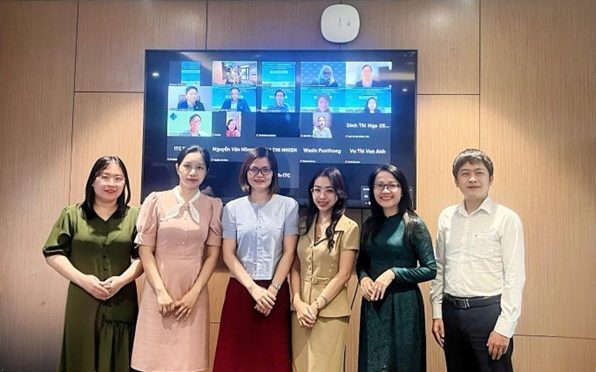

Dr. Linda Anne Stevenson, Acting Director of the APN Secretariat, delivered the opening speech, along with Mr. Le Ngoc Tuan, APN National Focal Point for Vietnam, and other distinguished guests from partner institutions, including Assoc. Prof. Bui Thi Mai Hoai of the Sustainable Finance Institute and Prof. Sangam Shrestha of the Asian Institute of Technology.
Dr. Le Huu Quynh Anh provided an overview of the project’s goals and the strategies that will be employed to enhance water security in urban areas. Key discussions during the meeting included the impacts of climate change on water resources, particularly in the Mekong Delta, presented by Prof. Le Anh Tuan from Can Tho University. Assoc. Prof. Ngo Kim Chi, from the Vietnam Academy of Science and Technology, shared insights on water security challenges in Vietnam’s highland areas.
Regional perspectives on water stewardship were also highlighted, with speakers such as Ms. Hanh Huynh from Water Stewardship Asia Pacific discussing efforts in the Mekong Delta, and Prof. Natthachet Tangdamrongsub and Pyae Mon Naing from AIT covering urban water issues in Chiang Rai (Thailand) and Phnom Penh (Cambodia).
The meeting concluded with an engaging discussion, led by project leads, on collaboration and actionable strategies to build urban water resilience across the region. This initiative, part of the APN’s Climate Resilience Research Program, marks a significant step in addressing urgent water security challenges in the Asia-Pacific region through sustainable, nature-based solutions.
With the support and cooperation of all involved parties, the project is expected to bring long-lasting benefits to the development and sustainability of urban communities in South-East Asia.
Source: Asia-Pacific Network for Global Change Research (APN)